

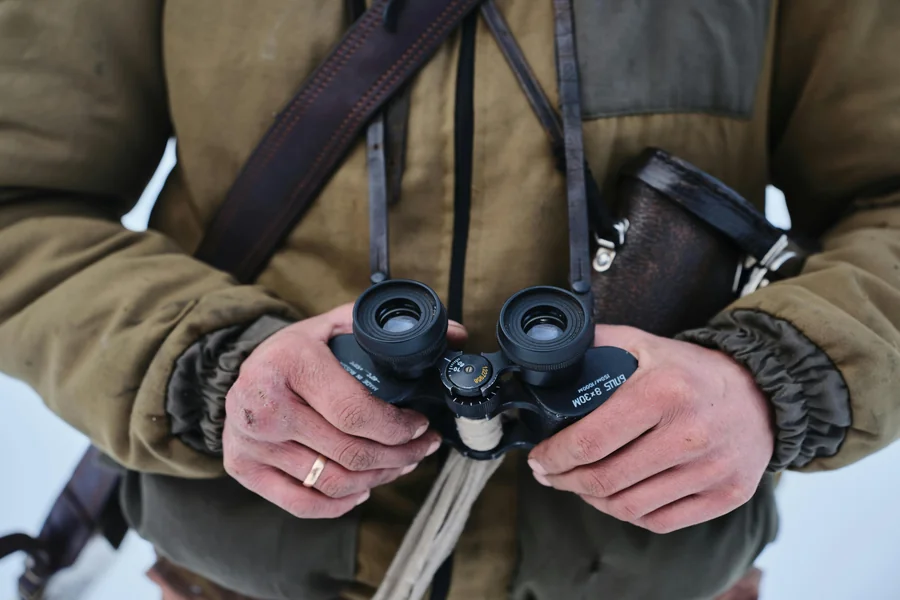
Before diving into the process, it’s important to clear up what “zeroing in” actually is. When shooters talk about zeroing, they usually mean aligning their firearm’s sights or optics with the point of impact on a target. But when it comes to binoculars, “zeroing in” refers to making sure your focus, diopter, and alignment are perfectly tuned to your eyes—so what you see through them is sharp, balanced, and reliable.
If your binoculars aren’t properly adjusted, even the best glass can lead to eye strain, double images, or missed details. It’s not just about comfort; it’s about precision. A clear, properly set view helps you spot targets faster and interpret distance and movement more accurately. Whether you’re on the range or in the field, taking a few extra minutes to dial in your binoculars can make a big difference in your performance.
Setting Up Your Position and Environment
Good optics adjustment starts with stability. Before you even touch the focus wheel, find a steady position. Set yourself up in the same shooting stance or seated position you plan to use during your session. This ensures your body alignment and posture are consistent with how you’ll actually be spotting. If possible, rest your elbows or use a tripod or shooting bag to keep the binoculars steady while you adjust them.
Lighting also matters more than people realize. Bright sun, glare, or deep shadows can all affect how you perceive clarity. Try to do your adjustments in lighting conditions similar to what you’ll face during the session. That means if you’re practicing at dusk or dawn, fine-tune your binoculars in low light instead of under midday sun. This small detail keeps your visual setup realistic and your results accurate.
Adjusting the Eyepieces and Diopter for Your Vision
Most people’s eyes aren’t identical—one might be slightly stronger than the other. That’s where the diopter adjustment comes in. It’s usually a ring near the right eyepiece that compensates for these subtle differences. To get it right, cover the right lens (the one with the diopter adjustment) and use the center focus wheel to make the left side perfectly sharp. Then, switch—cover the left lens, uncover the right, and turn the diopter until the right side comes into focus too.
Once both eyes are balanced, you should see a single, clear image without any strain or blur. Don’t rush this step. A quick, careless adjustment can cause fatigue and poor depth perception later. Take your time, breathe, and fine-tune until everything feels crisp. Afterward, note or mark your diopter setting so you can easily reset it if it gets bumped during transport or cleaning.
Refining Focus and Field of View
With your eyes balanced, it’s time to refine the focus. Aim your binoculars at a target about 100 yards away—a tree, a paper target, or a marker with fine detail. Use the center focus wheel to bring the image into sharp relief. Then, shift your gaze to something closer, maybe 30 or 40 yards away, and readjust slightly. Moving between near and far helps your eyes adapt naturally to different distances and ensures your binoculars respond smoothly when spotting multiple targets.
Equally important is adjusting the interpupillary distance—the width between the two eyepieces. If the barrels are too far apart or too close, you’ll see a double image or a shadowy “halo.” Move the barrels inward or outward until the two circles merge into one. You’ll know you’ve nailed it when the view feels comfortable and natural, almost like you’re seeing without an optical aid at all.
Testing Accuracy and Stability in Real Conditions
Once your binoculars are set, put them to the test. Look at a known target or marker at a measured distance—something like a 200-yard steel plate or range flag—and note how clear the details appear. Shift your focus quickly between near and far points to see how well your adjustments hold up. If you find yourself refocusing too often, tweak your diopter or interpupillary distance again.
It’s also a good time to test stability. Even the sharpest optics can’t help if your hands shake or your stance wobbles. Practice resting your elbows on your knees or using a tripod adapter to steady your view. Binoculars like shooting binoculars are designed for tactical precision, but they still rely on your setup and consistency to perform at their best. Remember, your eyes, hands, and equipment all work as a team. The goal is for everything to feel effortless once you’re in shooting mode.
Clarity Is Confidence
Zeroing in your binoculars isn’t just a pre-shoot ritual—it’s an investment in accuracy and confidence. Proper setup ensures that when you’re in the field or at the range, you’re seeing exactly what you need to see—no guesswork, no strain. It’s about aligning your gear with your natural sight, so your focus stays on the shot, not the struggle to see it.
The process may seem small, but like most things in shooting, consistency is everything. A few extra minutes before your session can mean the difference between catching a detail or missing it completely. Once you learn to fine-tune your binoculars, it becomes second nature—a quiet skill that sharpens both your vision and your results every time you head out.
