

Almost every industry is looking at ways to improve their environmental impact. In part, this is being driven by the need for the industry to reach net zero by 2050. Of course, there’s no magic button that makes this or aviation sustainability possible.
Instead, there are a series of changes happening within the industry. Every change contributes toward the final goal of aviation sustainability, proving it might actually be possible.
Here’s what the airlines are currently doing to help ensure the target is met.
Review Of Aircraft – Move To Turboprop
Jet engines have become more efficient. Scientists and engineers have spent countless hours improving the aerodynamics of planes, reducing weight, and getting more from the engines. The result is a surprising drop of around 50% in carbon emissions per kilometre flown since 1990.
Of course, technology is likely to continue advancing, allowing planes to use even less fuel to reach their destination.
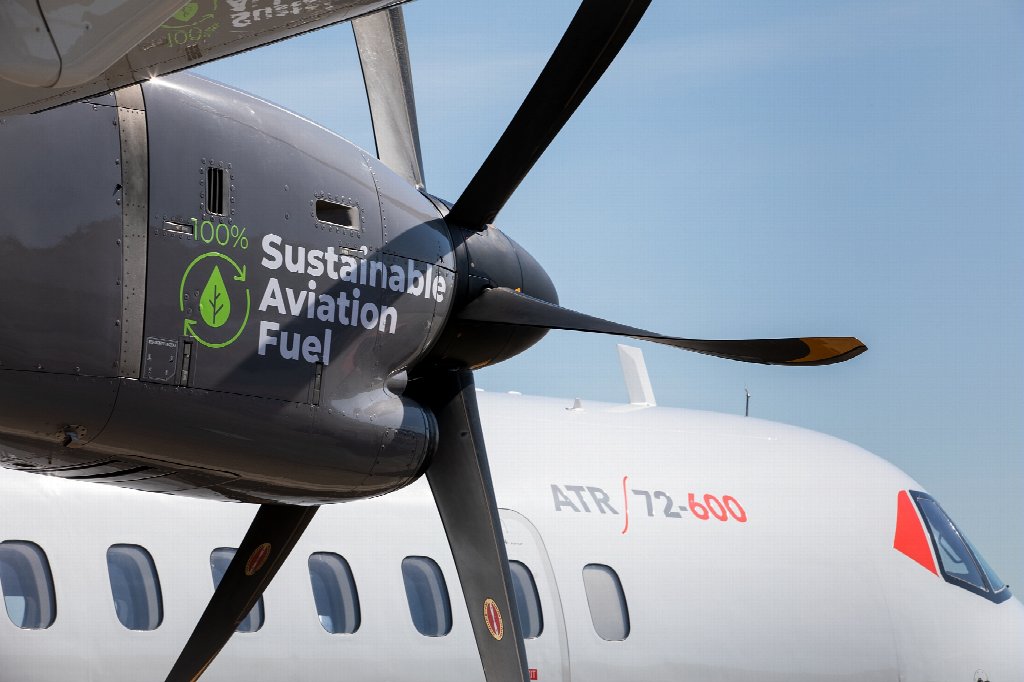
In addition to the improved efficiency, many airlines are investing in turboprop planes, such as the ATR 72. It’s potentially the most popular turboprop on the market.
Turboprops fly at lower speeds and altitudes. Over shorter flights they can use as much as 45% less fuel than a jet. In addition, they are capable of taking off and landing on much shorter runways compared to jets.
The result has been a dramatic increase in turboprop usage, allowing airlines to improve regional mobility and reduce emissions while offering more services.
Sustainable Aviation Fuels
A key part of both jet and turboprop emission reduction is the fuel being put into the engines. Sustainable Aviation Fuel (SAF) is made from used cooking oil, household waste, and other discarded fats. It contains no fossil fuels.
In short, using SAF means a dramatic drop in carbon emissions and a reduction in the damage being caused to our planet. While there is room for further improvement, this is a large step toward the zero-emission goal for aviation sustainability.
SAF has already successfully been used in several turboprop planes and it can be used in jet engines. However, as a new fuel source, it is not yet produced on a scale large enough to create an efficient production line. As a result, it costs significantly more than standard jet fuel.
Airlines and the aviation industry will have to commit to SAF to bring about production and distribution changes – it’s these that will make it an affordable replacement to traditional jet fuel.
Summing Up
Aviation sustainability is only possible in the long term if all airlines commit to net zero and take positive steps toward this goal. The ideas and infrastructure are already present, they simply need support from the airlines to make it possible.
The good news is this is happening and the uptake rate across the industry is likely to increase the closer we get to the 2050 goal.
